
By Susan Shipton
THE DAY
Weather matters in sheep dogging, it affects both humans and sheep behaviour. I remember getting feedback from an instructor at a clinic in Ontario in April and noting, as I stood a meter from him, that the heavy rain was not falling on the grass between us. It was blowing parallel to the ground. I could hardly see him, much less hear him.
I should have cherished the moment, we got wet snow the next day.
June 8th 2025 at Applewood Ridge Farm was a comfortable 20 degrees with a breeze. The sky was hazy from the smoke of the raging wild fires in the West, reminding us all of just how lucky we were to be outside doing something we enjoyed.
The refreshment hutch was well stocked with coffee, tea and snacks. Water was accessible through the use of a nifty little tap affixed to the top of a large bottle. I mention this mostly because of the expression of delight that emanated from Victoria when she saw the tap gizmo. I might even have heard the phrase “life changing” when she described how often she and John would use such a thing.
THE SHEEP
All were North Country or NC crosses. The group for the NN Handlers were some older girls from Ian Talbot’s flock; lightly dog broke they tended to follow the handler a bit, and moved off pressure without taking flight.
The rest were Tracy’s yearlings from Kevan Gretton, along with some of his open ewes and Ian’s yearlings. Kevan and Ian’s sheep are mixed together multiple times a year for events and are used in the winter arena trials as well. They came to Tracy’s farm early in the week so they had time to get reacquainted.
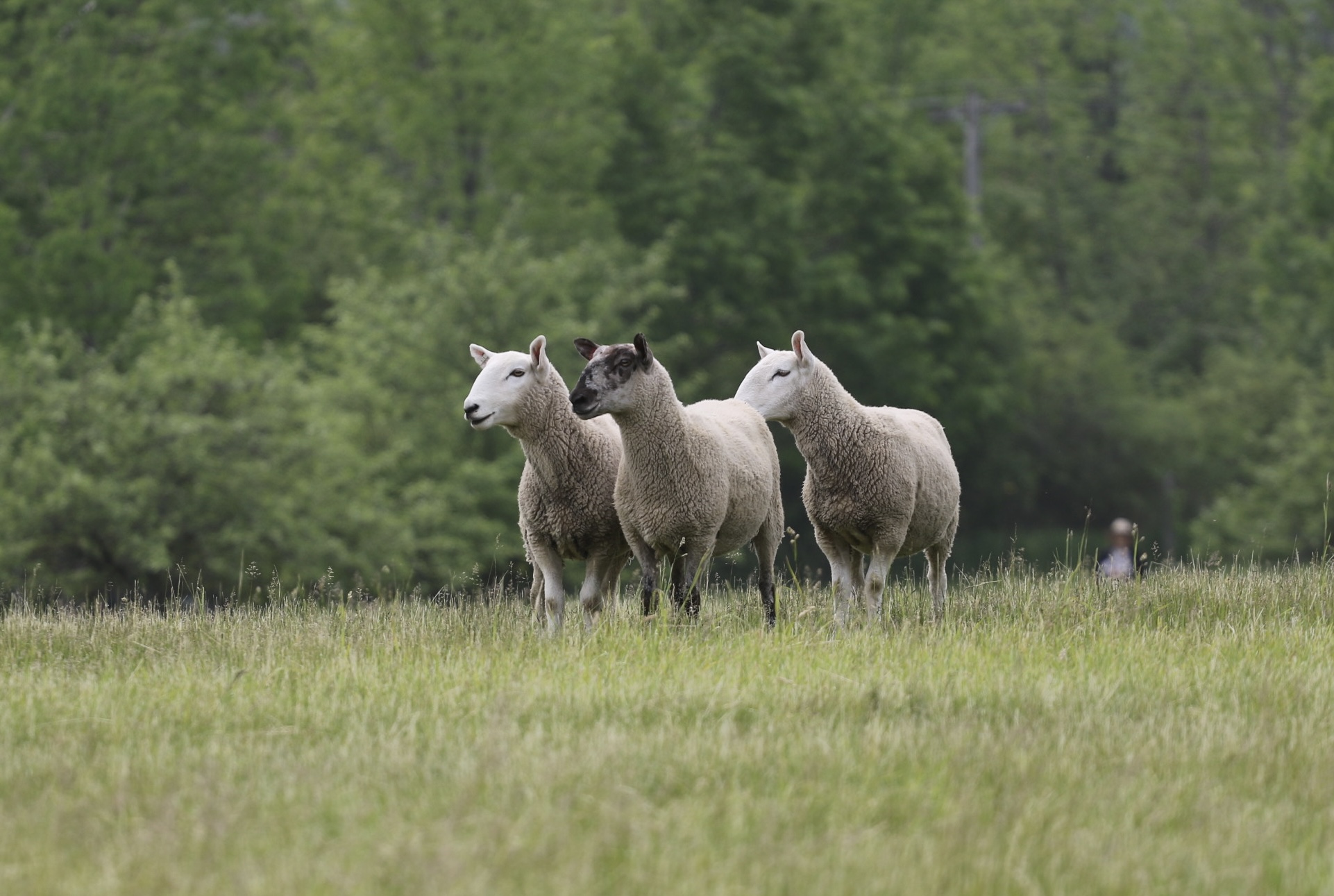
*Photo credit Norma de Rose
THE COURSE
In the handlers' meeting Tracy explained that if sent to the left, the dog would encounter a dip in the terrain and also need to navigate a row of trees and long grass which might obscure its view of the sheep. Many trials are on fields with clear site lines, but many also have trees, rocks and dips, so this was an opportunity to expose the dog to that type of challenge.
The send to the right offered the dog a clear view of the sheep for the entire OR, but was into the pressure of the set out pens and exhaust.
Tracy suggested another challenge if we wanted to take it up. If the Handler moved back and sent from about three meters behind the post, they would be in a dip and the dog would not be able to see the sheep, making for a blind out run.
Tracy’s intention was that we do the course the first time and then work to improve our run on the second go. However, we were encouraged to use our time on the field however we saw fit, retiring only if we, or the sheep, had had enough.
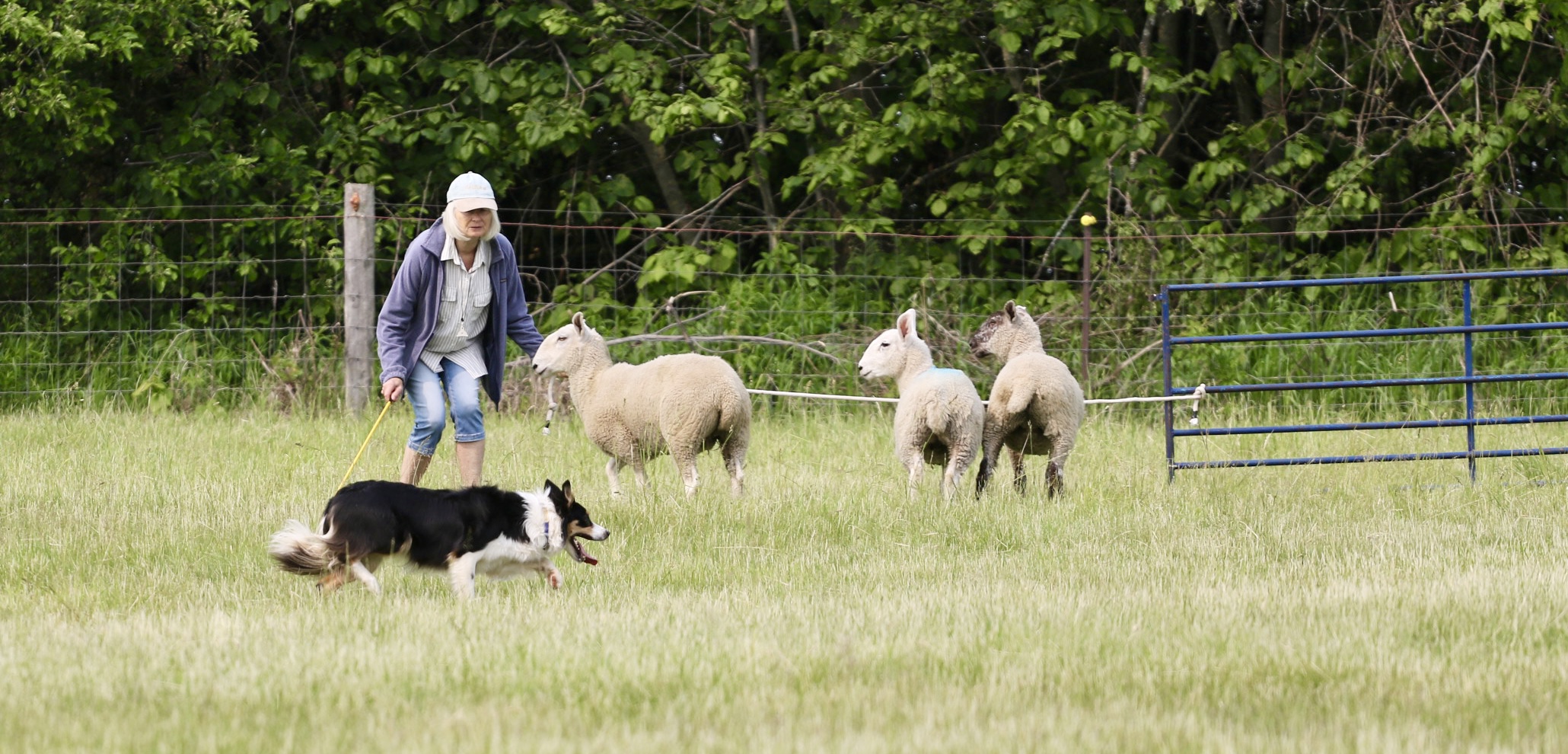
*Photo credit Norma de Rose
My plan was to support my dogs by walking parallel to them on the drive, with the idea that I would fade back the less they needed me. Turned out there wasn’t a lot of fading. Okay, there wasn’t any. The sheep were spritely and the draw to the exhaust was a hearty beckon. It was all we could do to keep the girls on the field!
I was reminded where my training holes are, but as importantly, I learned that I need to improve my ability to react when things don’t go as planned; a skill worth cultivating for all aspects of sheep dogging.
I wondered how others at the practice day had utilized their time on the field. So I literally drew names from a hat and asked. Here are the responses.
THE PARTICIPANTS
Peter Bangarth and Aoife
The support of the community of handlers is always a joy. Without the pressure of competition, it was easier to focus on basics and redo tricky parts. The complication of trees through which Aoife had to outrun was a really good touch, forcing both of us to think differently. Look out, folks, because every run this year at this new level has been better than the previous one!
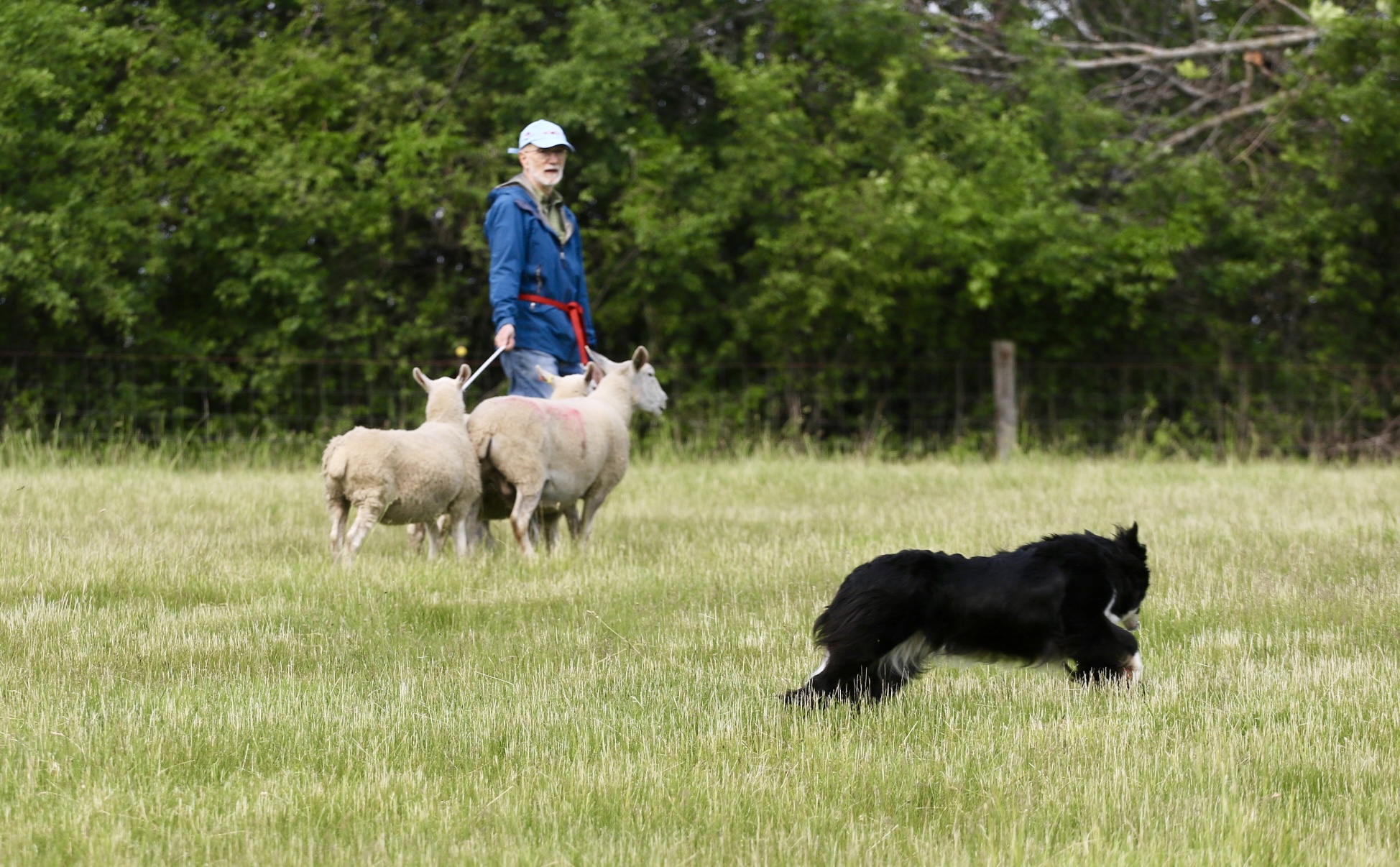
*Photo credit Norma de Rose
Beth Harris and Sage
At the practice day, I ran my new girl, Sage. We haven’t had much field time, so this was an effective way to see what we needed to work on. We were given 7 minutes to complete a run - it ended up being the perfect amount of time to make an attempt to complete the course and then work on the issues that came up. Running a course showed me exactly where our weaknesses are and where we have made some progress. Aside from being a productive learning day, it was really nice just to see everyone after a long winter. It was a beautiful day with good sheep and good company. Now to get the hay off the field and do some homework!
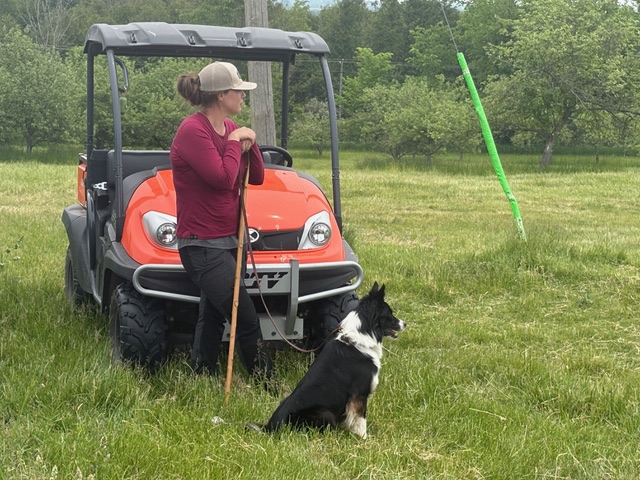
*Photo credit Susan Shipton
Lisa McPherson and Robbie
What a fantastic day! I would have to say having the opportunity to work sheep in a low stress environment is extremely helpful. The other participants really help with suggestions and encouragement and as always, watching others leads to learning. My take away was re-evaluating things when they don't go as planned and sorting out how to pivot from what your plan was that was unsuccessful, to doing it differently to get success.
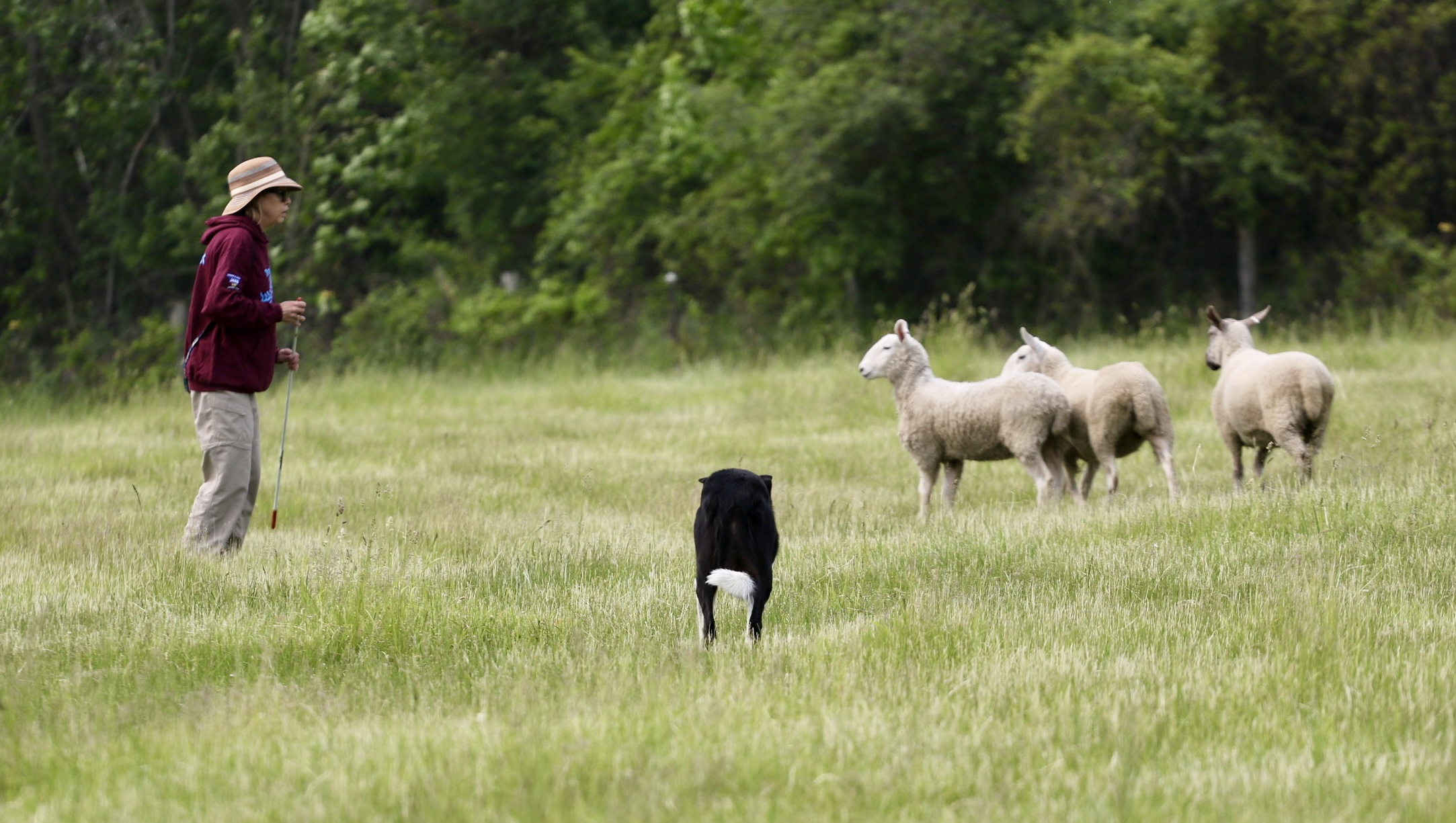
*Photo credit Norma de Rose
Geneviève Pronovost and Knox
My experience of the practice day at Applewood Ridge Farm was most rewarding. Knox and I really enjoyed testing our trial skills without being judged and without the stress of performance. It was great to get feedback from our peers after our run, as the aim of the day was to train to improve. Thanks to OBCC, Kevan Gretton and Tracy Hinton for the organization, the beautiful field and the challenging ewes.
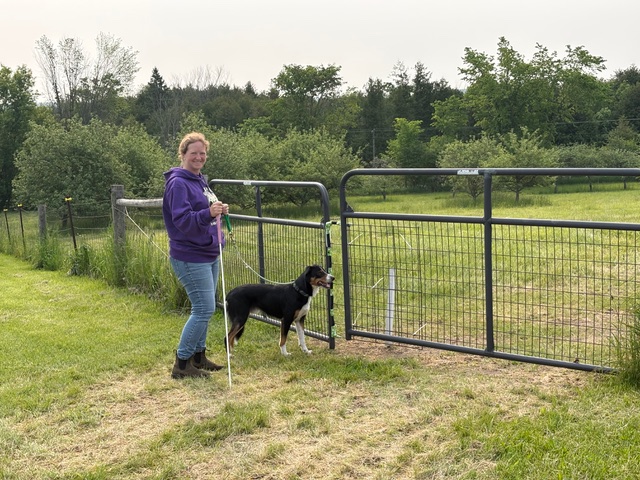
*Photo credit Susan Shipton
I had a longer and more detailed conversation with Kathy Keats and I thought her description of how she pivoted from her original plan with her two dogs was an excellent example of how to make the best of a practice day. Here it is in full.
Kathy Keats with Max and Tess
Practice days are such a gift. The opportunity to get our dogs some experience is priceless. They are a huge contribution from the host and organizers to the sheepdog community. A massive thank you to Tracy, Kevan, Ian the OBCC and everyone who helped make it happen. Fun days reconnect us with those who share our passion, which fuels our motivation. They give us permission to test - and poke holes in our assumptions.
For myself, I had over estimated one dog and underestimated another. I had hoped for more from two year old Max. I’ve been building his confidence, getting him to push, to hold his ground. He can do all the farm chores at home; run out 350 yards and even find sheep in an orchard. And while I often change the orientation of the field, it’s not enough. I haven’t worked much on small groups, but I expected he would manage the short OR easily, as he has a good stop and I wasn’t concerned about the light sheep.
I was caught off guard by my assumptions. He found the situation confusing; he was unprepared to find and settle three lovely, flighty sheep in a smaller, treed field. Some dogs make adjustments on their own fairly easily. Some need more guidance, he is one of the latter. Time to work on smaller, lively groups and emphasize new places.
Had I not tried Max at the practice day, I would have happily carried on, thinking everything was fine. This was not the right situation for him. I had three year old Tess along to help out if needed, so I ran her in his place. This past winter being what it was, and having not been out much with Tess, I didn’t know what to expect. But not only did she run well, she compensated for much of my rusty handling. A bonus I didn’t expect!
In the spirit of using practice days to test, I used her for set out for the first time. This was me leaning into what scared me. Tess can have strong opinions and sheep don’t ‘warm up’ to her. She prefers not to let them go when they have an agenda. It was the end of the day, the draw had grown stronger, the sheep more opinionated.
Again Tess exceeded my expectations. So this fun day moved us along on that path of trust; of accepting one another’s flaws and striving to help each other find that balance where the team is greater than the sum of the parts.
And this is the truth and irony of sheep dogging, or anything that we pursue. There is no certainty. We are just as likely to fall flat where we are confident as we are to find small wins where we are afraid to tread. But the only way we find out is to try...and that’s the greatest gift of a practice day.
THE SUCCESSFUL STRATEGY
Tracy and Carter had a lovely run, which I think was about more than the home field advantage! So I asked her for some thoughts on her strategy.
Me: I think the draw to the exhaust presented a challenge for many. Particularly on the turn around the post and the cross drive. It’s not uncommon at trials for the exhaust or set out pens to create a draw in those places. How did you manage these tricky spots, and how did the nature of the sheep factor into your approach?
Tracy: The sheep were very "touchy". To manage that I made sure to keep the dog back and not to "goose" them on the lift and top half of the fetch. That settled them and made them more agreeable on the post turn. I believe that helped a lot. On the drive I managed the draw to the exhaust by keeping abreast of the sheep so that I was moving them but also covering the pressure at the same time. Of course I could have just got a more settled group LOL!
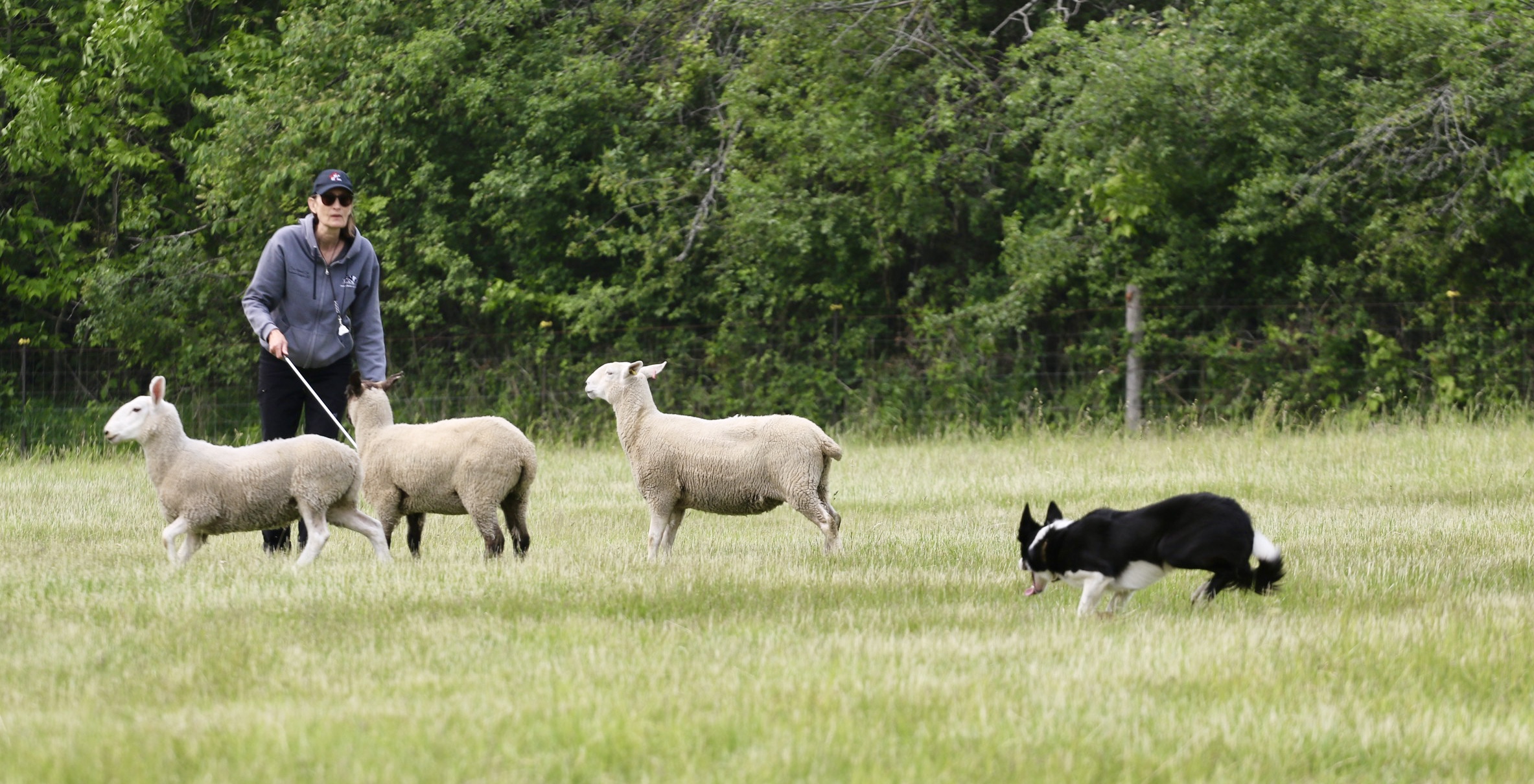
*Photo credit Norma de Rose
THE FARM
A heartfelt thank you to Tracy for hosting us, to Kevan and Ian for the sheep and to the OBCC and all the volunteers who made the day possible. And as always, thank you to the woolly girls.
It is always a treat to be at Applewood Ridge Farm. It is a truly special place. I enjoyed working my dogs; learning, and having a laugh. But I think I enjoyed my walks in the hayfield behind the house as much. As I watched my dogs run along the path, I thought about the way a place is forever inhabited, and graced, by those who have called it home.
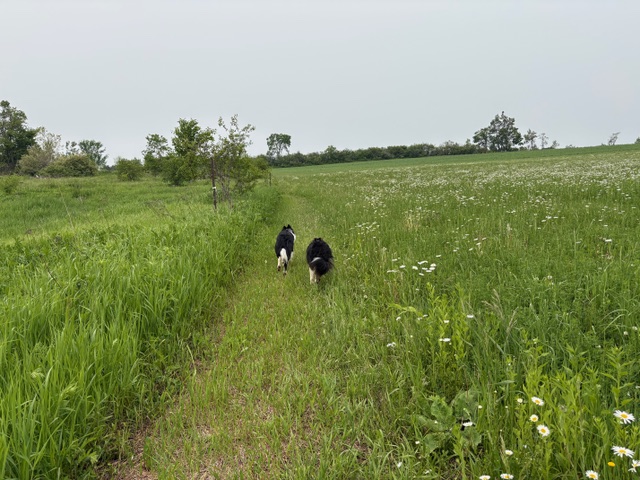
*Photo credit Susan Shipton